

That recent New York Times British and Irish dialect quiz ticked all the boxes for me.
From your answers to 25 multiple choice questions on the words you use and how you pronounce them it attempts to identify where you grew up. Mine was pinpoint accurate.
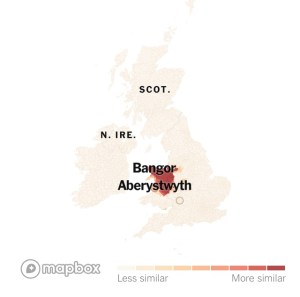
I can immerse myself in this sort of stuff all day long but its appeal stretches far beyond the word nerds. It’s an impressively-researched piece of work obviously driven by some extensive data and clever tech under the surface, and relevant to most people who grew up in the UK or Ireland.
Proper science, plus a universally-interesting topic and a personally-tailored diagnosis at the end makes for a satisfying experience – and an instantly shareable marketing tool.
By asking us a few simple questions like what we call an individually-baked piece of bread (I’ve lived in London over 15 years but a ‘bap’ will never be a ‘roll’ – what’s wrong with you people?), the New York Times has introduced and endeared itself to a whole new audience.
It’s a great example of how a ‘traditional’ media brand can embrace the freedom and unshackled opportunities of digital to get itself in front of a new readership.
What really won me over was the fact that the multiple-choice answers to the question on what you call your grandparents included the Welsh words for grandmother and grandfather (nain and taid, respectively), as well as their own dialectal variations for South Wales (mamgu, tadcu).
A newspaper publisher based 3,000 miles away from my hometown on another continent is recognising that I called my grandfather my taid – I can’t say I’ve noticed the Guardian or the Telegraph doing anything similar recently.
So, on St David’s Day, it’s a sincere da iawn/well done to the New York Times for articulating a communications and marketing idea that’s a success in any language.
 Richard Ellis Communications