It is what you say and the way that you say it..

untitled

That recent New York Times British and Irish dialect quiz ticked all the boxes for me.

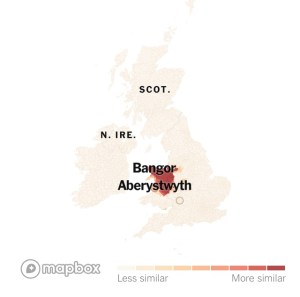
From your answers to 25 multiple choice questions on the words you use and how you pronounce them it attempts to identify where you grew up. Mine was pinpoint accurate.
NYT

I can immerse myself in this sort of stuff all day long but its appeal stretches far beyond the word nerds. It’s an impressively-researched piece of work obviously driven by some extensive data and clever tech under the surface, and relevant to most people who grew up in the UK or Ireland.

Proper science, plus a universally-interesting topic and a personally-tailored diagnosis at the end makes for a satisfying experience – and an instantly shareable marketing tool.

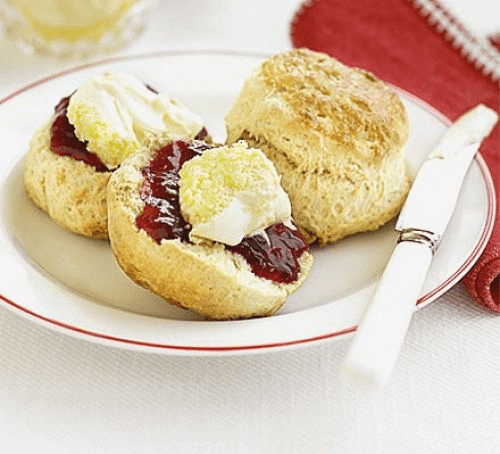
By asking us a few simple questions like what we call an individually-baked piece of bread (I’ve lived in London over 15 years but a ‘bap’ will never be a ‘roll’ – what’s wrong with you people?), the New York Times has introduced and endeared itself to a whole new audience.

It’s a great example of how a ‘traditional’ media brand can embrace the freedom and unshackled opportunities of digital to get itself in front of a new readership.

What really won me over was the fact that the multiple-choice answers to the question on what you call your grandparents included the Welsh words for grandmother and grandfather (nain and taid, respectively), as well as their own dialectal variations for South Wales (mamgu, tadcu).

A newspaper publisher based 3,000 miles away from my hometown on another continent is recognising that I called my grandfather my taid – I can’t say I’ve noticed the Guardian or the Telegraph doing anything similar recently.

So, on St David’s Day, it’s a sincere da iawn/well done to the New York Times for articulating a communications and marketing idea that’s a success in any language.

How the Fyre Festival fiasco humbled social media’s big cheeses

fyre_festival_ad_-_h_-_2017

I came to the Netflix Fyre Festival documentary – like most people, let’s be honest – ready to laugh at a bunch of over-privileged hipsters ‘roughing it’ in the Bahamas surrounded by stroppy supermodels. There is admittedly an element of that to what makes it so gripping but there’s more to the story than the schadenfreude.

It’s set up as a series of talking head interviews with festival-goers and the poor b******s who were employed to work on the project – some wry and resigned, others still shell-shocked. These calm testimonies, interspersed with footage from inside the Fyre camp in the lead-up to the event, plot the narrative arc of Billy McFarland, the CEO, as the perception of him moves from wunderkind entrepreneur to delusional sociopath.

At the beginning it’s all beach parties, beers and Bella Hadid. McFarland is in the flush of a bromance with business partner on the project, Ja Rule. Once the beer runs out Ja Rule seems to disappear completely and is nowhere to be seen when the festival gets underway. He only resurfaces to assess the damage after the event on what looks like the worst conference call in history and which would have been ripe for a good old-fashioned Downfall parody if half the world’s social media movers and shakers hadn’t still been stranded in the Caribbean.

But to go back a few months, to before the catastrophe had unfurled, it was 250 of these social media influencers and 10 of the world’s most famous supermodels who were employed so effectively to promote the event. It was they who were responsible for it selling out in 48 hours – rare for a first-time festival – and generating the sort of clamour for a ticket not seen since Willy Wonka hung up his apron.

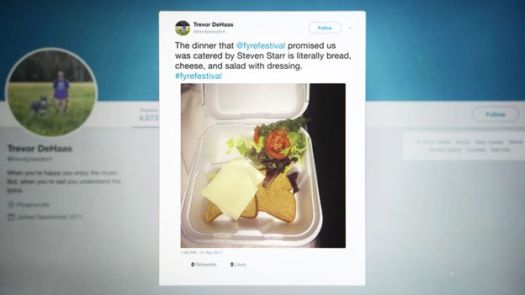
By the time the festival date rolled around the whole set-up was so dangerously shambolic that there was serious doubt whether it could even go ahead but by then the private planes had left Miami and the cool kids were on the way. As the inevitable bedlam ensued, it was a distant cry from the Instagram-idyllic promotional shots that were clogging timelines only weeks earlier. From the crucible of this chaos – by then a hideous hybrid of Hi-De-Hi and Lord of The Flies – came a tweet.

_105223909_fyresandwich976
NETFLIX

Despite the meticulously-planned, eye-wateringly expensive and achingly-hip promotional campaign it was this picture that tipped the festival into the public consciousness, making it news around the world. To paraphrase one of the marketing gurus – powerful supermodels built the festival and it was taken down by a picture of some cheese on toast. It captured the shambolic dark comedy of the whole escapade as it was unraveling and contributed to an ultimate reckoning-up which ended with McFarland facing a six-year jail sentence for fraud.

Another of the contributors quips that there were two festivals; one on Instagram and one on the island. I think most of the festival-goers would argue that there was only actually one, but it wasn’t the one they paid for. The Fyre Festival was born, played out  and killed on social media – without ever delivering in real life.

We often talk about the power of social media but there’s no better example than this for showing that it’s a power that’s available to us all, not just the big cheeses.

Meat or no meat – Greggs’ PR is well done

Greggs

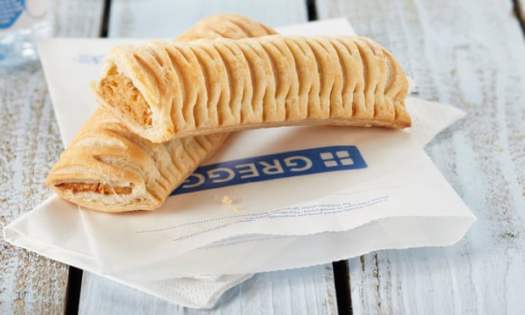
Greggs announced their new Vegan Sausage Roll yesterday to widespread and mixed reaction. It certainly provided some light relief in the media from the complaints about rail fare increases – the traditional annual lightning rod for all our post-festive grumpiness.

This time last year Greggs were apologising for their 2017 Christmas campaign which saw them replace the infant Saviour in the Nativity scene with a normal sausage roll. It raised predictable hackles in religious circles and drew, at best, a mixed reaction from PR commentators. The feeling was that they were courting controversy, without being particularly creative. Even their half-hearted apology had a whiff of ‘job done’ about it.

But a year on, they’ve got more savvy. They’ve flipped the strategy on its head. Veganism seems to make some people angry – we’ve seen countless examples in the media recently. In this environment, Greggs have recognised there’s no need to stir up their own controversy. There’s a torrent of pantomime rage out there directed at people who avoid animal products so why not just tap into it?

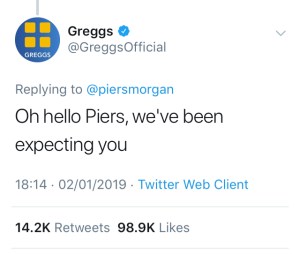
They have used social media’s capacity to deliver scorn on demand to generate the ‘controversy’ and ensuing publicity for their product, but this time without the risk of offending on any ethical or moral grounds and remaining on the side of animal-friendly virtue. Whether this is exactly as Greggs intended the campaign is perhaps up for debate, but I’m happy to give them the benefit of the doubt. Their response to Piers Morgan’s tweet suggested they had everything planned down to a T.

Piers

Either way, it definitely points to a new way of using a potentially toxic audience – the professionally scorned – that many PRs spend half their time trying to either carefully avoid or studiously ignore. Whichever side of the meat-versus-vegetarian-versus-vegan debate you sit on, I think we can all agree that from a PR perspective, this is definitely a prime cut.

So this is Listmas…

to-do-list-compressor

If you’re like me, you’ll be drowning in lists by now. Presents you’re going to give. Maybe presents you hope to get. Food you need to buy. Work you need to finish. You might even have got going on your list of things to cut out in 2019.

In my experience, you are either a list-maker or you’re not. It’s a binary selection of options, ironically. How do those who are not list-makers manage to get from one end of their day to the other? Altogether now: listlessly!

Glimpsing someone else’s list is pure voyeurism. The illicit thrill of finding a discarded one in your supermarket basket. Crude, short-hand scrawls intended for the shopper’s eye only, reminding them of the domestic absence of cranberry sauce, goose fat and sprouts (small bag). For some reason, a peek at the list is a hundred times more exciting than just looking at what they buy at the till – where the promise has been delivered but is so much less potent by comparison (paging Freud…).

Even if you don’t make them yourself, by this time of year you can’t avoid them. Best songs of the year. Best books, TV shows and films of the year. Maddest Donald Trump tweets of the year. Ten 2018 tweets that are way too real. Ok, I made the last one up but check Buzzfeed next week.

It seems that everything at this end of the year is condensed to a list. We need to absorb a whole twelve months’ worth of information all at once while we’re still struggling to tick everything off ourselves.

Lucky you if by now you’ve been able to consolidate a few of your own lists into one. Your festive food list with your last-minute present list, perhaps. Or your mad Trump tweets list with your list of things to cut out in 2019. It hints there might be light at the end of the tunnel.

In reality, there’s no escape, as soon after Christmas the quiet news schedules are full of Honours lists and those-we-have-lost lists. Meanwhile, you’re piously drawing up your list of new year’s resolutions for a happier, healthier, better you. Although, this one seems more like a list-junkie’s methadone to wean off the hard stuff after the heady listing binge of December. Cold turkey? Tick.

What all list-makers realise eventually is that there is no end. Just when you think you’ve crossed out the last item on one, you find the need to start another and the whole process begins all over again. If nothing else, writing this piece has at least given me the chance to tick one more item off my own never-ending cycle..

I hope your festive list delivers on its promise and if you need any help ticking off your communications goals for 2019, I’d be happy to help. Merry Christmas.

Plogging? What the ‘Word of the Year’ also-rans tell us about language

Plogging

It’s the Collins’ Dictionary Word of the Year (WOTY) time again. Just after the autumnal double whammy of Halloween and Bonfire Night it clears its throat and makes its annual announcement before anything non-seasonal is drowned out by the cacophony of Christmas.

This year’s WOTY was ‘single-use’, describing products – often made of plastic – intended for one use only and which can have a damaging effect on the environment. Collins explain that the term has “..seen a four-fold increase since 2013, with news stories and images such as those seen in the BBC’s Blue Planet II steeply raising public awareness of the issue.” A worthy winner, in both senses of the word.

This year’s other shortlisted contenders come from a variety of fields of our shared experience. There are the political (backstop; Gammon), the cultural and ethical (MeToo; whitewash; gaslight; vegan) and those from tech and popular culture (VAR; floss).

There’s another word on the shortlist which for me, as a word nerd, comes from the most interesting category of all. The word is ‘plogging’, which, if you’ve not heard of it, is defined as ‘a recreational activity, originating in Sweden, that combines jogging with picking up litter.’ Resisting the obvious opportunities to poke fun (recreational?) it’s terms like ‘plogging’ that best show us how we use language and how our vocabulary expands and contracts according to our needs.

Look at some of the shortlisted words from years gone by:

2013: Cybernat, phablet, Olinguito

2015: Dadbod

2016: Sharenting

How many of these are still in common use literally only a few years later? They have already fallen into relative obsolescence and, of this year’s contenders, ‘plogging’ is for my money the term most likely to end up going the same way. Dictionary-compilers of the future might be baffled over why we needed a term for the fun pastime of running round the streets frantically grabbing crisp packets like a low-rent, last round of the Crystal Maze, but that’s not to say it doesn’t deserve its place in the shortlist in 2018. The terms that exist in the margins are the ones that can tell us the most – not just about what’s going on in our lives and societies at the time, but how practically and functionally we employ language to meet our demands.

These words and phrases mean something real when they’re coined. Sometimes they last, sometimes they don’t, but they always serve a contemporary purpose as our lexicon flexes and adapts to articulate whatever is preoccupying us at that point. Even if that means that when we look back on the 2018 list in five years’ time we find that ‘plogging’ has proven to be more ‘single-use’ than the plastic…