Conquering communications stage fright

Stage fright

I was talking recently to a lawyer friend about writing blogs. He was saying how he dreaded his turn coming round to write the weekly corporate post. It wasn’t the writing of it he disliked – he actually quite enjoyed that bit. It was pressing the ‘Publish’ button and putting it out there for the world to see that was the source of his anxiety. In his words, it made him feel both exposed and like he was losing control of it.

I can see what he means. Looking at the exposure element first, even now, in an age of rolling social media updates it’s not unreasonable to feel self-conscious when you’re posting an article online. After all, a professional article presented to your peers on a key industry topic is a world away from an Instagram post of your French bulldog eating avocado on toast.

You want it to read well, to be factually correct and to make a clear point. It sounds obvious but the way to do this is to verify your facts and sources, circulate it to your colleagues (junior and senior) for feedback before publishing and make any amendments accordingly. This isn’t just common sense and professional good practice, it will improve your blogging confidence too.

Once you’ve done that, it’s time to let go of the angst. But that’s easier said than done and communications people like me should share some of the blame. For example, I’m always telling clients that understanding your audience is the most important part of communications, which is true. But on the other hand, I wouldn’t want them to be so scared of the audience, so paralysed by stage fright, that they can’t communicate effectively.

Tips from a teenage diarist

The popular podcast ‘Berkhamsted Revisited’ sees two women in their 20s look back at their teenage diaries, discussing them in all their cringeworthy detail. It doesn’t get any more exposing than that. Laura Kirk, one of the presenters, explains how she deals with it:

It freaked me out a bit to start off with, and I had a couple of wobbles when I first started recording them…. I’m normally very cautious, but eventually thought what’s the worst that could happen? Since then I’ve gone all guns blazing.”

It’s admittedly an extreme example but you get the point. And it’s worked for them – the third series started a couple of weeks ago.

What’s also interesting about this chronicle of two girls’ awkward teenage years is that most of its listeners are men – roughly a 70/30 male-to-female ratio. And this links it to my anxious legal friend’s second problem – that of losing control. Part of the point of putting your message, or blog, or podcast out into the world, I told him, is that you do relinquish control of it. In the case of the girls of Berkhamsted Revisited, they might never have predicted they would find such success with a male audience but I’m sure they have welcomed them all the same.

You might ask… but isn’t PR all about control? Well, yes and no. Good PR and comms is about controlling what’s in your power but acknowledging that you can’t control everything. Managing the expectations of your client or employer on this can be a big part of a comms professional’s role. (I’ve worked for in-house PR teams where corporate management have been surprised when they don’t see a press release go straight into the pages of a newspaper verbatim. Unless you’re Kim Jong-un’s press guy, that’s never going to happen.)

Any communication is always a compromise between what you say and how it’s received by the audience. Otherwise you’re just talking to yourself. Once you’ve done everything in your power, you just have to take the leap. Have confidence. Press publish. Put it out there. Accept that it might take on a life of its own, and that that might not be a bad thing.
 

Brewing up more trouble with a cuppa

boris-tea

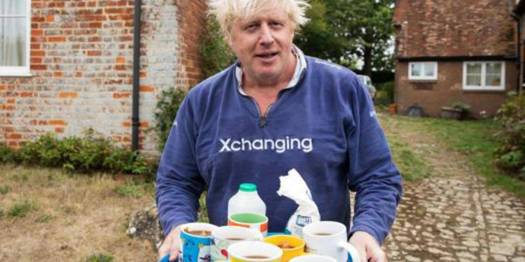
The weekend’s media was full of footage of Boris Johnson serving a tray of tea to the journalists waiting vainly for a comment at the end of his driveway. As the row over his comments on the burqa continues to escalate the UK’s media outlets were seeking reaction from the former Foreign Secretary but were offered nothing more for their troubles than a few cups of stewed, tepid tea.

Ferrying a tray of refreshments to the pack of hacks hovering on the boundary of your property has become a device that those enjoying some high-profile media heat can reach for from the PR toolbox every now and again. It’s usually only employed in the midst of big or long-running stories, those weighty enough to warrant a phalanx of reporters waiting at the gate of the besieged protagonist as they jostle and harry for some news scraps to be chucked their way.

The intention of the person at the centre of the storm is to sidestep the story but still make some sort of connection with the media, and by extension, the outside world. It’s a neutral olive branch offered outside of the entrenched argument which, of course, if they’re lucky might shift public opinion a little in their favour and create a nice photo opportunity for themselves while they’re at it.

Jonathan Ross did it when he decided not to renegotiate his contract with the BBC after the Andrew Sachs phone call furore. Gianfranco Zola did it when he was sacked as manager of West Ham. Even the usually PR-savvy President Obama did it when the White House communications team made some disparaging remarks about the Washington political press corps, delivering them not only coffee, but doughnuts too – truly next level stuff.

It’s far from a sophisticated and slick media rebuttal but is seen as something that can’t really do the focus of the story any further harm. You’re giving the journalists something, even if it’s not really what they want, and at least trying to show them and their audience that you’re human after all. But when does reaching for this well-worn tool from the PR toolbox become throwing a spanner in the works?

Well, that sort of depends on the media story. A presenter leaving a TV channel or a Premier League manager getting sacked by his football club are hardly matters of state. But, as in Boris Johnson’s case, when you’ve made controversial remarks about religion in an already febrile political environment proffering a cup of warm tea in a Mini Eggs mug is possibly not an appropriate way to respond. Look at the Obama example again. When he used the same trick it was over some frustrated and unguarded White House remarks about the media themselves. It was basically an apology and an attempt at, quite literally, with doughnuts, sweetening the journalists up. It certainly wasn’t employed to defuse an issue of religious tension.

The footage of Johnson being filmed sparring light-heartedly with the reporters made him look not just unstatesmanlike but once again like someone with a dangerously or disingenuously blithe approach to media handling. The political consideration over whether what he said was morally right or wrong is one thing, but the inability to realise that, either way, this isn’t a moment for levity is entirely another. Ignoring the anger – whether you feel this anger is justified or not – of a significant proportion of the citizens of a country of which you were Foreign Secretary a few weeks ago by joking around with reporters is not a tricksy way to play the media. From a PR perspective, it is worse than saying and doing nothing at all.

Silly season of opportunity

Shark

We all know it’s been coming. The signs have been there for some time. The media silly season is upon us.

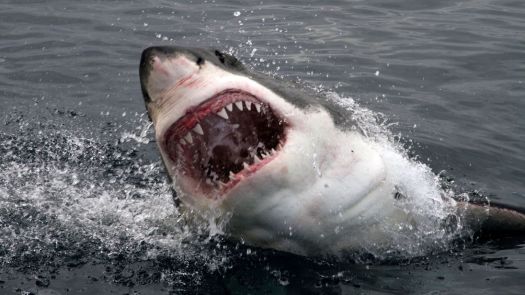
For me, it’s when the stories about sharks start circling that we know we’re in too deep. The Telegraph sought to surf the SEO wave of public interest by concentrating on ‘where to spot them’. The Sun had no such qualms about upping the ante, asking pretty much the question we all want the answer to: ‘how common are shark attacks and are there great whites in Britain?’ Even the BBC got in on the act.

Full marks, however, go to the Express, who even MAPPED (their caps) the shark threat hotspots round the UK, renamed the ruthless marine killers ‘Danger sharks’ and used the phrase ‘ominous fins’ in case you weren’t panicking enough already. If only Robert Shaw’s Quint had been an Express reader, with that sort of research at his gnarled finger tips, ‘Jaws’ would have been wrapped up in under half an hour.

News-wise, it’s not likely to get any better either. Traditional sources of media interest are drying up faster than the UK’s reservoirs.  The World Cup’s over. Wimbledon’s over. Parliament is in recess. Brexit will rumble on, of course, in many ways like one long silly season story in itself. Dreamt up two years ago and scrawled on the back of a fag packet (or, rather, the side of a bus), but so far-fetched it’s proving impossible to refute.

We’ve all – everyone of us – become much more savvy and switched-on to this media-saturated world. I’m old enough to remember when the phrase ‘slow news day’ wouldn’t be used outside the media but now everyone says it. It’s become over-used, lazily-invoked and is almost always employed as a cynical critique.

But, for those of us who work in the PR and media relations industries, a slow news day is a day of opportunity. A silly season is a whole summer of it. Securing media coverage is a competitive business. But when the agenda gets a little quieter, papers don’t stop printing, websites don’t close down and the 24-hour news cycle doesn’t stop churning. It stands to reason that if you take a few of the traditional news-space-fillers out of the equation then there’s more room left for everyone else.

If you want to raise your profile, or promote your business, or project your message – this next month is a great opportunity. Get your story together. Research your media. Look at the news cycle. Have an angle. Plan ahead. Make yourself available. Take all these things into account and you’re much more likely to make your mark in the media – and that applies whatever the season.

It’s a bit like getting yourself in shape before you go in for the kill. Like a great white shark off the coast of Torquay…

If you’d like some help with your media relations, please get in touch.

Out of inspiration for your Out of Office?

Out of office

The summer holiday season approaches. Sun cream. Currency. Insurance. And, most glamorous of all, the Out of Office message to be written and activated.

Long gone are the days when the factory whistle would signal the downing of tools for a fortnight. Nowadays, we move from employee to carefree holidaymaker with a click of the mouse, tempered only by a vague awareness of the disgruntlement of the poor colleague whose name and contact details we’ve offered up in our absence.

Unless of course you take a different strategy. Like waltzing off into the sun and leaving no clue as to how the working world will manage without you. Or, conversely, maybe you’re keen to trumpet your own continued availability in case you return to the office to find your job taken by a robot, who’s also now your boss.

What began as a functional message, like a sort of extended ‘back-after-lunch’ note hastily stuck on a shop door, has developed into something broader. The language we use in our ‘OOO’ might give away more about us than we think. Here are five recognisable types:

The Informer – Provides a functional and useful message. ‘I’m away until the 30 August. For any queries in my absence, speak to Steve in Accounts.’ They might even say they’ll respond themselves in a genuine emergency. Very much the genus of the species.

The Martyr – One who goes on holiday but who, through worry over the security of their position or an obsessive inability to let go, is still effectively at their desk. ‘I’m on leave but I will be checking my emails regularly and available on my mobile. I’d rather you call me than allowed a problem to develop for when I return. Or just call me. I’ll answer. Because I want you to know how devoted I am to my job.’

The Absconder – The complete opposite of The Martyr. ‘I’m on leave for two weeks, I will not be responding to any emails when I’m away. Or to any sent when I’m away, when I get back. Deal with it.’ Either for the very senior or the very junior, not the majority of us in the neurotic middle.

The Comedian – We’re all in a tremendous mood on the Friday before we disappear off to be our true selves in another country for a fortnight, but just be aware that what sounds so hilarious and carefree on the eve of your holiday (‘No more working for a week or two..’) might not sound so funny to your contacts in your absence. Or to you, jetlagged and grumpy, two weeks on Monday.

The Fantasist – This is someone who wants the freedom of The Absconder, while pretending to offer the commitment of the Martyr, and ends up with a line that none of us are buying: ‘I will have no access to my emails while I am away.’ They’re saying they’d like to, but it’s simply beyond their control. To which the rest of us say: it’s 2018, where are you holidaying – the moon?

So, enjoy your holiday, and remember to be mindful of the language you use in the message you leave behind. I’ll end by acknowledging the hollow laughter of my fellow freelancers or members of the precariat who would never dream of telling clients they’re even out of the office in the first place…

If you need some PR, communications or writing support over the summer holidays – or any other time – you can contact me here.

BBC’s pitch-perfect World Cup strapline

p067clmp

‘History will be made’, states the BBC’s World Cup trailer. It’s a pretty emphatic claim. Will it, definitely? And does it work as a strapline? Yes and yes are the answers to those questions. Here’s why.

Those four, well-chosen, words capture the precise reason why watching the World Cup is so captivating and electrifying. Because if you follow from start to finish you can be confident – no, stone cold certain – that by the end of it you will have seen something play out in real time that will go on to be repeated on our screens for many years into the future. Probably long after we, ourselves, have left the field of play. Like, say, totally at random….

Tardelli’s rapturous celebration in the ’82 final…

Van Persie’s meme-triggering Superman header at the last World Cup…

Or, inevitably, Carlos Alberto’s peerless thunderbastard from Mexico 70…*

*(Here it is from the reverse angle, fellow geeks)

These are all stand-out moments from World Cups gone by which are now part of the football fabric. We don’t just recognise these touchpoints from tournaments past, we expect to see them every time this footballing jamboree rolls around. And at any other time too. Many of us can remember watching them happen, on our TV screens or in the stadiums, with our own eyes, and we have now willed them into eternity through our mutual and mass comprehension. Over and over again, over all those years.

And it’ll happen again at this World Cup. Right now, we’re enjoying the delicious anticipation. The point where the who, when and what it means are all yet to be revealed. Which player, what match, which team. Whose tip-over into tragedy, whose tale of triumph.

So, well done BBC. A purposeful and pitch-perfect strapline that made me stop, take notice, think and agree. Up to 3.2 billion tuned in to the last World Cup and I see no sign of those figures dipping this time around. Nearly half the global population is watching the world’s most popular sport. It’s inevitable: history will be made.